If you drive in London or anywhere across South East England, you already know how quickly a car can start showing signs of corrosion. Between constant rain, salted winter roads, endless stop-and-go traffic, and narrow streets full of debris and puddles, cars here age faster underneath than most people realise. The truth is simple: if you plan to keep your car for more than a few years, mobile rust protection is no longer a luxury—it is basic maintenance, the same way an oil change or brake check is.
Why Rust Develops Faster in London and South East England
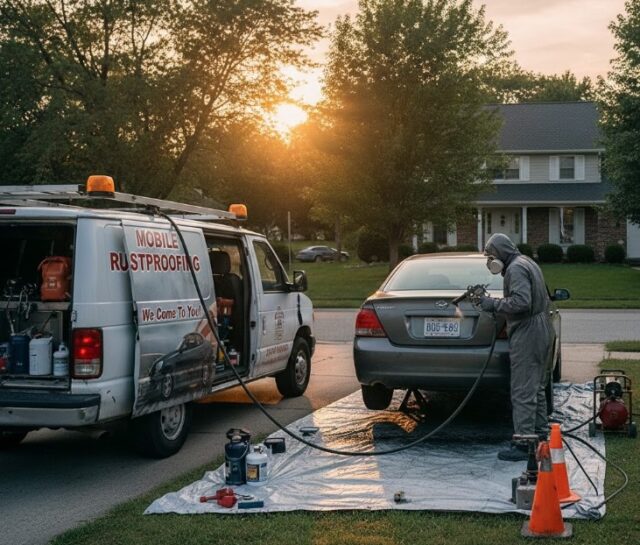
Most people assume rust is just a “car gets old” problem. In reality, it is caused by daily environmental factors that are especially common in this region:
Climate + Urban Conditions = Accelerated Corrosion
London and the South East have:
- Frequent rainfall and high humidity
- Congested streets that trap moisture under the chassis
- Road salt during winter nights
- Standing water in gutters, parking lots, old cobblestone roads, and narrow residential streets
- Particles from brake dust and pollution that speed up oxidation
If you add to that the fact that many people park outside, near trees or hedges, corrosion starts much earlier than expected—sometimes even on cars less than five years old.
Why This Matters for Long-Term Car Owners
Rust spreads silently. By the time you see a surface bubble on a wheel arch, corrosion underneath has already taken hold in areas such as:
- Subframe mounting points
- Suspension arms
- Brake lines
- Sills
- Exhaust hangers
- Floor pans
Ignoring early rust can lead to MOT failures, expensive welding repairs, or even structural issues that make the car unsafe.
How Mobile Rust Undercoating Services Work
Mobile rust protection follows a clear and professional process. Good technicians don’t just spray the underside and leave—they clean, prep, inspect, and only then apply the coating.
Below is the typical workflow:
1. Full Undercarriage Assessment
The technician begins with a detailed inspection of your chassis, subframe, fuel tank straps, brake lines, floor pan, sills, and wheel wells. Photos or videos are usually provided so you can see everything for yourself.
Common issues found during inspections
| Component | Typical Problems | Severity Impact |
| Brake lines | Surface rust, pitting | High – can cause leaks and MOT failures |
| Sills | Bubbling, cracking, flaking paint | Medium – structural if left untreated |
| Subframe | Spot rust, metal thinning | High – expensive to replace |
| Suspension arms | Rust flakes, loose scaling | Medium – affects alignment & safety |
| Floor pan | Small perforations, thinning metal | High – requires welding |
2. Thorough Cleaning and Preparation
This is the most important part. A proper undercoating service removes:
- Dirt
- Old loose underseal
- Salt deposits
- Moisture
- Rust flakes
Without this preparation, coating seals the corrosion in, making the problem worse. A competent mobile service performs high-pressure washing and manual scraping before applying any treatment.
3. Rust Treatment and Neutralisation
Once clean, affected areas are treated with a rust converter or rust neutraliser that chemically stops oxidation. This forms a stable, black protective surface that prevents corrosion from advancing.
Good mobile specialists also use cavity wax inside the hidden sections of the car—sills, chassis rails, doors, boot lids—because rust often starts from the inside out.
4. Application of Long-Lasting Undercoating
Only after inspection, cleaning, and rust treatment comes the protective step: the undercoating itself.
There are two main categories:
| Type | Description | Best For |
| Rubberised Undercoating | Prevents rust, deadens road noise, flexible against stone chips | Daily drivers, new cars |
| Wax-oil / Cavity Wax | Flows into seams, ideal for internal protection | Older cars, classics |
| Polymer/Resin Coatings | Premium, long-lasting, hard-wearing | 4×4 vehicles, vans, pickup trucks |
Most mobile technicians will blend two systems—rubberised coating underneath, cavity wax in hidden sections—for maximum coverage.
5. Final QC Check and Future Recommendations
At the end, you receive:
- Before-and-after photos
- A list of treated areas
- Maintenance recommendations
- Estimated lifespan of the coating (commonly 2–5 years)
A quality undercoating is not a “spray and forget” job. Checking yearly ensures nothing new has developed.
Why Choose a Mobile Service Instead of a Traditional Garage?
Mobile technicians bring something garages cannot: convenience and transparency. You can watch the entire process and even discuss areas of concern.
Advantages of Mobile Undercarriage Protection
| Benefit | What It Means for the Driver |
| No downtime | Keep your car at home while it’s serviced |
| Cost-effective | Lower overhead = lower prices than garages |
| Full transparency | See exactly what is being treated |
| No need for lifts or shop access | Perfect for driveways and residential streets |
| Flexible scheduling | Evening and weekend availability |
A mobile professional also tends to spend more time on preparation, because their work reputation depends heavily on results and customer feedback.
Who Most Benefits From Mobile Rust Undercoating?
While every car on UK roads faces rust exposure, some vehicles are especially vulnerable:
1. Cars Driven Daily in City Conditions
Frequent short trips + moist air + road spray = perfect rust conditions.
2. Family Cars and Commuter Vehicles
These often stay parked outside 24/7, speeding up corrosion.
3. Electric Vehicles
EVs have exposed subframes and battery casings that must stay rust-free for safety.
4. Vans and Work Vehicles
Builders, delivery drivers, and tradespeople often drive through muddy sites, debris and salted roads.
5. 4x4s and Off-Road Vehicles
Land Rovers, Nissan Navaras, Toyota Hilux, Mitsubishi L200—these models accumulate dirt in hidden frame channels.
6. Classic Cars
Older metal + previous repairs + thin paint = ideal conditions for rapid spread if not protected.
How Long Does Undercoating Last?
It depends on driving conditions and the type of coating:
| Coating Type | Expected Lifespan | Notes |
| Wax-Oil | 1–2 years | Needs periodic top-up |
| Rubberised Underseal | 2–4 years | Good balance for daily drivers |
| Premium Polymer Coatings | 4–6 years | Best long-term durability |
Most drivers in London prefer a 2–3 year maintenance cycle due to weather and road conditions.
Costs of Mobile Rust Undercoating in the South East
Pricing varies based on vehicle size and condition, but here is a realistic breakdown:
| Vehicle Type | Typical Price Range |
| Small cars (Fiesta, Corsa, Polo) | £150–£220 |
| Medium cars (Golf, Focus, A-Class) | £200–£280 |
| SUVs (Tiguan, Qashqai, XC60) | £250–£350 |
| Large SUVs & 4x4s (Discovery, Hilux) | £300–£450 |
| Vans | £280–£450 |
| Classic cars | Depends on condition – inspection required |
Heavily rusted vehicles needing advanced treatment may cost a bit more.
Maintenance Tips After an Undercoating Service
To maximise protection:
- Avoid driving immediately through deep puddles for 24–48 hours
- Inspect the underside every winter for early signs
- Jet-wash under the wheel arches occasionally
- Keep drain holes clear
- Reapply wax spray in high-impact areas every 1–2 years
These small habits significantly extend the life of your coating.
When researching options in the region, many drivers look for reliable specialists who not only treat the rust but also explain the process clearly.
That is why people often search for car rust undercoating services such as those offered. Not just for convenience but for the personalised inspection and photo documentation that mobile experts provide.
Why London Drivers Are Switching to Mobile Rust Protection
In a region where cars face one of the harshest corrosion environments in the UK, mobile rust treatment has become the smarter choice. It’s practical, transparent, and tailored to the car’s real condition. Instead of a quick spray in a workshop, you get a detailed, step-by-step process that actually stops rust, protects the chassis, and extends your car’s usable life.
If you want to avoid expensive repairs, MOT failures, and structural problems down the line, booking a proper inspection and undercoating earlier rather than later is the best investment you can make—especially if you plan to keep your car more than a few years.