Office workers type between 8,000 and 12,000 words per day during emails, reports, and messaging. That amount of typing shapes how fast work moves.
Small improvements in keyboard setup can save hours every week. Many people never change the default settings on their computer. That approach leaves a lot of productivity on the table.
Keyboard customization can remove friction from daily tasks. Faster shortcuts, smarter input tools, and layout adjustments reduce repetitive movement and typing mistakes.
Productivity often improves without buying new hardware. A few thoughtful tweaks can change how quickly ideas move from your mind to the screen.
A more efficient workday often begins with the tools you use most. The keyboard sits at the center of that workflow.
Why keyboard customization matters for productivity
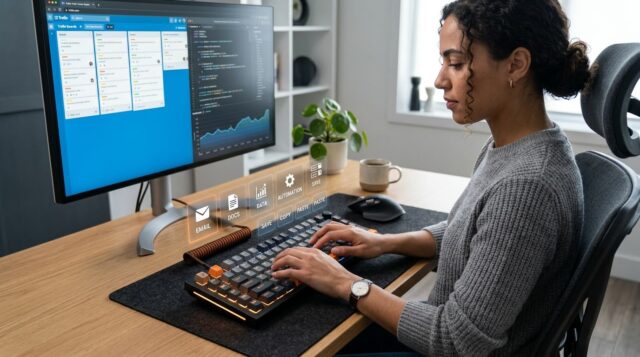
Improving keyboard efficiency reduces cognitive load and repetitive actions. Fewer interruptions during typing keep attention focused on the work itself. Many professionals notice three practical benefits once customization becomes part of their workflow.
- Faster writing speed during emails, reports, and documentation
- Reduced typing errors and fewer corrections
- Less strain on fingers and wrists during long sessions
- More natural workflow when shortcuts replace repetitive actions
Efficiency often improves because common actions require fewer steps. A keyboard configured for personal work habits becomes a productivity tool rather than a basic input device.
Choosing a smarter input method
The fastest typists rarely rely only on standard keyboard input. Modern input tools add predictive text and intelligent correction. Those features reduce mistakes and speed up long writing sessions.
One option to download many professionals adopt is 搜狗输入法下载. Typing becomes fluid and responsive because the system predicts phrases based on context.
The AI engine anticipates the next word and reduces keystrokes during longer sentences. Writing flows quickly with minimal lag. Errors appear less often because the software adapts to the user’s writing patterns.
Smart input tools help in situations where long messages or detailed documents are common. Typing speed increases because fewer corrections interrupt the writing process.
Over time the system learns vocabulary and phrasing habits, which makes everyday communication faster.
Creating custom keyboard shortcuts
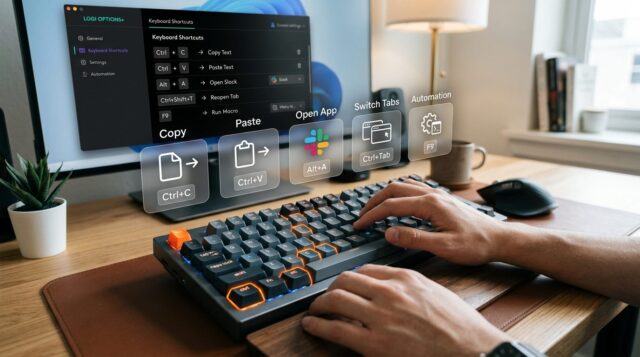
Keyboard shortcuts remove unnecessary mouse movement. Many professionals rely on a few basic ones such as copy and paste. Advanced customization goes much further.
Operating systems allow users to assign shortcuts to applications, commands, and scripts. Replacing repeated actions with a single key combination saves time across the entire workday.
Before adding shortcuts, identify tasks that appear repeatedly during daily work. Good candidates include:
- Opening frequently used apps
- Launching project folders
- Formatting text in documents
- Switching between workspaces or browser tabs
- Inserting commonly used phrases
Efficiency grows because common operations happen instantly. Muscle memory develops quickly when shortcuts stay consistent. Over time the keyboard becomes the fastest path to nearly every digital action.
Adjusting keyboard layout for comfort
Typing comfort plays a large role in sustained productivity. Poor layout alignment can slow typing and create physical fatigue. A small change in keyboard configuration often makes a noticeable difference.
Several layout options exist beyond the standard QWERTY design. Some professionals experiment with alternative layouts that place common letters closer to the center of the keyboard.
The following table shows a quick comparison of common keyboard layouts.
| Layout | Key Idea | Best For |
| QWERTY | Standard layout used globally | General office work |
| Dvorak | Common letters placed on home row | Speed focused typists |
| Colemak | Minimal change from QWERTY | Users seeking easier transition |
Changing layout requires a short adjustment period. Many users adapt within a few weeks. Typing becomes smoother once finger travel decreases. Comfort improves during long writing sessions.
Using macros for repetitive tasks
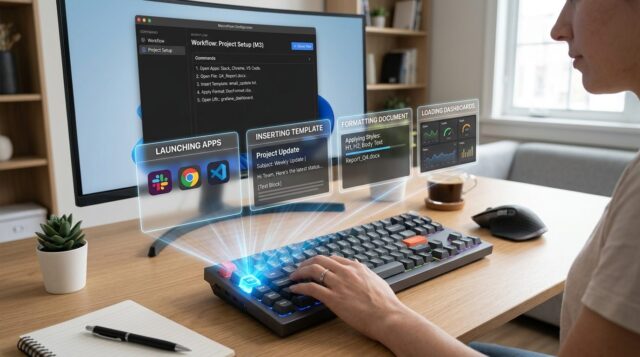
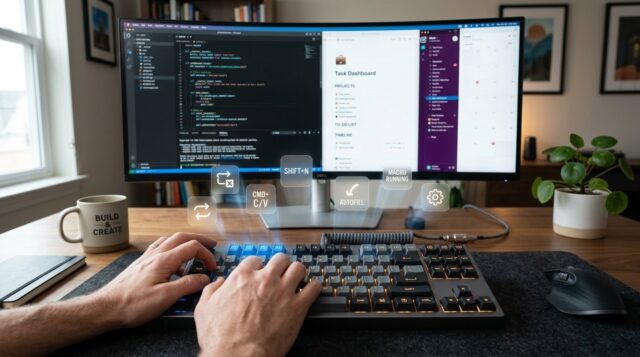
Macros automate sequences of actions. A single key can trigger multiple commands instantly. Professionals who handle repetitive documentation or data entry benefit greatly from macro tools.
A macro might insert a formatted email template. Another macro could open several applications used during a daily workflow. Automation removes repetitive typing and clicking.
A few practical examples include:
- Insert a full email greeting and signature
- Open project dashboards and communication tools
- Format headings and paragraphs in reports
- Generate structured meeting notes templates
Efficiency increases because routine tasks disappear into the background. Instead of repeating steps manually, the keyboard triggers them instantly.
Fine tuning typing accuracy
Accuracy often matters more than raw speed. Frequent corrections interrupt concentration and slow down work. Several keyboard settings help reduce those mistakes.
Autocorrect and predictive typing tools can assist during longer writing sessions. Key sensitivity settings also influence accuracy. Mechanical keyboards sometimes allow adjustment of actuation points, which affects how easily keys register input.
Fact: Research published in the Journal of Human Computer Interaction shows that reducing typing errors by just 10 percent improves writing speed by nearly the same margin during long work sessions.
Accuracy tools create a smoother workflow because fewer interruptions break focus. Writing becomes faster even when the typing speed itself remains unchanged.
Organizing your digital workspace around the keyboard

Keyboard customization works best when combined with an organized digital workspace. Efficient navigation across files, windows, and applications supports faster work.
Many professionals rely on keyboard driven navigation systems. Window managers and productivity tools allow movement between tasks without touching the mouse.
Practical improvements often include:
- Quick navigation between open windows
- Hotkeys for switching projects or workspaces
- Keyboard driven search tools for files and notes
When navigation happens through the keyboard, context switching becomes almost effortless. The result is a workflow where ideas move quickly without constant interruption.
Small keyboard changes can transform a workday
A keyboard might look like a simple device, yet it sits at the center of modern digital work. Every email, report, and message passes through it. Customization improves both speed and comfort during long work sessions.
Productivity gains often appear gradually. Predictive typing reduces mistakes. Shortcuts remove repetitive actions. Macros automate routine tasks. Adjusted layouts improve typing comfort. Together those changes build a smoother workflow.
Efficiency grows when tools adapt to the user rather than the other way around. A few thoughtful keyboard adjustments can turn everyday typing into a faster, more enjoyable part of the workday.